Indoor Mast Lifts for Concert Venue Lighting Truss Work
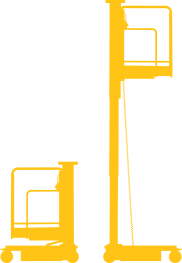
Concert venue lighting truss work requires mobile elevated work platforms (MEWPs) that can safely position technicians at heights of 3-6 meters while providing stable platforms for installing, adjusting, and maintaining overhead lighting fixtures. Indoor mast lifts offer precise vertical positioning with minimal floor space requirements, making them suitable for navigating between seating areas and stage equipment. Entertainment venues typically feature lighting trusses positioned 4-6 meters above floor level, requiring access equipment that combines compact dimensions with adequate working height and platform capacity for technicians and their tools.
Typical Work Patterns in Entertainment Venues
Lighting technicians in concert halls and entertainment venues follow specific work patterns that influence equipment selection. Tasks include rigging lights onto trusses, focusing fixtures for optimal stage coverage, and replacing lamps or damaged components. Work duration varies significantly - quick adjustments during sound checks may take 5-10 minutes, while full lighting installations for touring productions can extend 2-4 hours per position.
EN 280:2013+A1:2019 defines MEWPs as mobile machines intended to move persons to working positions where they carry out work from the work platform. The International Powered Access Federation (IPAF) categorizes vertical mast lifts as Group 3a machines, distinguishing them from boom lifts and scissor lifts by their vertical-only movement pattern.
Most venue lighting work occurs at heights between 4-6 meters, matching standard truss installation heights. Technicians require multiple positioning moves during single work sessions, particularly when focusing multiple fixtures across a stage area. Platform load requirements must accommodate the technician's weight plus hand tools, test equipment, and lighting fixtures weighing up to 25 kilograms.
Equipment Options for Indoor Venue Work
Indoor mast lifts divide into two primary categories: self-propelled and push-around models. Self-propelled mast lifts enable single-operator repositioning while elevated, reducing setup time when multiple fixture adjustments are required. The Safelift MA50 self-propelled mast lift weighs 331 kg with 5m working height and 150kg platform capacity, matching typical venue requirements.
Push-around models require lowering the platform before manual repositioning but offer identical working specifications at lower acquisition costs. The Safelift PA50 push-around model provides the same 5m working height and 331kg machine weight as its self-propelled counterpart. Both configurations meet EN 280:2013+A1:2019 requirements for platform strength and stability.
Working heights from 3.5m to 6m cover most entertainment venue applications. The PA35 at 3.5m working height suits lower stage deck work, while MA60 and PA60 models reach 6m for higher truss systems. Platform dimensions directly affect working comfort and tool storage capacity - standard platforms measure 0.53x0.76m, while the SP50 stockpicker offers enhanced deck space at 0.63x0.59m for equipment-intensive tasks.
Machine weight impacts venue floor loading, particularly on raised access flooring and temporary staging. Models range from 236kg (PA35) to 466kg (MA60/PA60), allowing selection based on structural capacity.
Why Mast Lifts Excel in Entertainment Facilities
Mast lifts offer specific advantages for concert venue applications. Their compact footprint enables navigation through narrow aisles between fixed seating - critical when venues pack maximum audience capacity into limited floor space. Zero tail swing eliminates collision risks with adjacent equipment, seating, or architectural features during rotation.
All Safelift mast lifts operate on battery power, producing zero emissions for safe indoor operation without ventilation concerns. This contrasts with combustion-powered alternatives that generate carbon monoxide and require extensive air exchange. Electric operation also reduces noise during performances and rehearsals.
Low machine weight suits venues with structural limitations. The PA35 at 236kg distributes load across approximately 0.36m² footprint, resulting in floor loading under 700kg/m² - within typical venue specifications. Raised technical floors and temporary staging platforms commonly support these loads without reinforcement.
Precise vertical movement proves essential for accurate fixture positioning. Unlike scissor lifts with potential platform sway, mast lifts maintain stable vertical alignment throughout their travel range. The SP50 stockpicker's 0.63x0.59m platform provides 37% more deck area than standard configurations, accommodating tools and fixtures during extended work sessions.
Venue Access Requirements and Training
Entertainment venues implement specific access protocols for equipment and operators. Quick setup and breakdown capabilities prove critical for touring productions with tight schedules between performances. Mast lifts deploy rapidly - operators can move from transport position to working height in under 60 seconds.
Multiple units often work simultaneously during large-scale lighting installations. Coordination between operators requires clear sightlines and communication, facilitated by the mast lift's minimal footprint and open platform design. IPAF training categories cover Group 3a vertical lift operation, with courses addressing platform controls, emergency procedures, and hazard awareness.
Venue managers typically require proof of operator certification before permitting equipment use. IPAF certification provides internationally recognized credentials valid across European venues. Local regulations may impose additional requirements such as site-specific inductions or working at height permits.
Equipment scheduling must accommodate both planned maintenance windows and emergency repairs during events. Self-propelled models offer advantages for rapid deployment, while push-around units suit scheduled maintenance with predictable positioning requirements.
Matching Safelift Models to Venue Applications
The MA50 self-propelled mast lift combines 5m working height with 150kg capacity, suitable for frequent repositioning during focusing sessions. Its 331kg weight allows use on most venue floors without structural concerns. Platform dimensions of 0.53x0.76m accommodate single operators with standard tool sets.
For higher truss systems, the MA60 provides 6m working height while maintaining 150kg platform capacity. Despite increased height capability, the 466kg machine weight remains within typical floor loading limits. Self-propelled operation proves valuable when adjusting fixtures across wide stage areas.
The SP50 stockpicker configuration offers enhanced platform space at 0.63x0.59m - ideal for technicians carrying multiple fixtures or extensive tool collections. Its 5m working height matches standard requirements while 165kg capacity handles heavier loads. The 386kg machine weight balances capability with structural compatibility.
Budget-conscious venues may select the PA35 push-around model for lower-height applications. At 3.5m working height and 236kg total weight, it suits stage deck work and lower truss positions. The 130kg platform capacity accommodates single operators with basic tools, while manual positioning reduces acquisition and maintenance costs.
Safelift Mast Lift Specifications for Venue Applications
| Model | Type | Working Height | Platform Size | Weight | Load Capacity |
|---|---|---|---|---|---|
| MA50 | Self-propelled | 5m | 0.53x0.76m | 331kg | 150kg |
| MA60 | Self-propelled | 6m | 0.53x0.76m | 466kg | 150kg |
| SP50 | Stockpicker | 5m | 0.63x0.59m | 386kg | 165kg |
| PA35 | Push-around | 3.5m | 0.55x0.65m | 236kg | 130kg |
| PA50 | Push-around | 5m | 0.53x0.76m | 331kg | 150kg |
Frequently Asked Questions
What working height is needed for typical concert venue lighting truss work?
Most concert venue lighting trusses are positioned 4-6 meters above floor level. A 5m working height mast lift like the MA50 covers standard requirements, while 6m models handle higher installations in larger venues.
Should I choose self-propelled or push-around for venue lighting work?
Self-propelled models allow repositioning while elevated, saving significant time during focusing sessions where multiple adjustments are needed. Push-around units cost less but require lowering the platform between positions, making them suitable for less frequent repositioning tasks.
What platform capacity is required for lighting technician work?
Standard 150kg capacity accommodates one technician plus hand tools and light fixtures up to 25kg. For heavier fixtures or specialized equipment, consider the SP50 stockpicker with 165kg capacity and larger platform area.
Can mast lifts operate on raised technical floors?
Yes, lightweight models like the PA35 (236kg) distribute load effectively for raised floors. Always verify floor load ratings - most venue technical floors support 500-750kg/m², easily accommodating mast lift point loads.
What training do operators need for venue mast lift operation?
Operators require IPAF Group 3a certification covering vertical mast lifts. Many venues also mandate site-specific inductions covering emergency procedures and coordination with other stage personnel.

Sources
Get a Safelift quote
Tell us your facility constraints (working height, doorway width, country, lead time) and we send specs + indicative pricing within one business day. No registration, no sales call required.
Need a Safelift unit specified for your facility?
Get product specs, dimensional drawings, EN 280 compliance documentation, and pricing. Contact Safelift Sweden AB.