Greece Mast Lift Safety: SEPE Regulations and EN 280 Compliance Guide
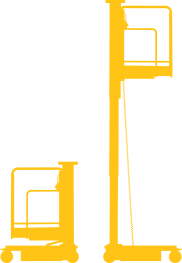
In Greece, indoor mast lifts and vertical personnel lifts fall under the jurisdiction of SEPE (Σώμα Επιθεώρησης Εργασίας - Labor Inspectorate Body), which enforces workplace safety regulations aligned with EU directives. Greek regulations implement EN 280:2013+A1:2019 through Presidential Decree 395/1994 on minimum safety requirements for work equipment and Presidential Decree 397/1994 on lifting equipment. All mast lifts used in Greek workplaces must comply with these harmonized standards, with operators requiring appropriate training certification recognized by SEPE inspectors. The regulatory framework ensures that equipment like Safelift's PA, MA, and SP series meets both European and Greek-specific safety requirements for indoor vertical access work.
National Regulator and Legal Framework
SEPE (Labor Inspectorate Body) serves as Greece's primary enforcement authority for workplace safety equipment, including mast lifts and vertical personnel platforms. The regulatory framework stems from Presidential Decree 395/1994, which transposes EU Work Equipment Directive 2009/104/EC into Greek law, establishing minimum safety requirements for all work equipment use.
Presidential Decree 397/1994 specifically addresses lifting equipment requirements, mandating annual inspections and thorough examinations. Law 3850/2010 provides the overarching framework for occupational health and safety, granting SEPE broad inspection and enforcement powers. ELINYAE (Hellenic Institute for Occupational Health and Safety) complements SEPE's role by providing technical guidance and safety publications in Greek.
All mast lifts operating in Greece must carry CE marking under Machinery Directive 2006/42/EC, demonstrating conformity with essential health and safety requirements. The Greek standards body ELOT has adopted EN 280:2013+A1:2019 without national deviations, making it directly applicable for all Mobile Elevating Work Platforms (MEWPs) including indoor mast lift models.
SEPE conducts regular workplace inspections to verify compliance, with penalties ranging from administrative fines to equipment prohibition for non-compliant operations. Employers bear primary responsibility for ensuring equipment meets all regulatory requirements and maintaining proper documentation in Greek.
EN 280 Implementation in Greek Regulations
EN 280:2013+A1:2019 functions as the harmonized standard for mast lifts in Greece, directly referenced in CE Declaration of Conformity documents. Greek authorities require strict adherence to EN 280's technical specifications, including platform load calculations based on minimum 2 persons at 80kg each, totaling 160kg basic platform capacity.
Annual inspections mandated by P.D. 397/1994 Article 4 must verify ongoing EN 280 compliance, examining structural integrity, safety devices, and operational controls. These thorough examinations require qualified inspectors familiar with EN 280 requirements and must produce written reports maintained in workplace safety files.
Platform dimensions must meet EN 280 minimums for operator safety. For example, Safelift MA50's platform dimensions of 0.53x0.76m exceed these requirements, providing adequate workspace for safe operation. Load sensing systems, emergency lowering mechanisms, and tilt protection features specified in EN 280 are mandatory for Greek market approval.
Documentation requirements include Greek-language user manuals per P.D. 57/2010, maintenance schedules aligned with EN 280 recommendations, and inspection certificates confirming compliance. Equipment modifications require re-certification to maintain EN 280 conformity status.
Operator Certification and Training Requirements
Greece does not mandate a specific national license for mast lift operators, unlike some EU countries. However, Article 12 of P.D. 395/1994 places strict obligations on employers to ensure adequate operator training before equipment use. This training must cover equipment inspection procedures, safe operation practices, emergency procedures, and hazard recognition specific to vertical lift equipment.
IPAF PAL Cards have gained widespread acceptance among Greek employers and SEPE inspectors as evidence of competent training. IPAF-approved training centers operate in Athens and Thessaloniki, offering courses in Greek that meet international standards. The typical PAL Card course covers both theoretical knowledge and practical assessment on actual equipment.
Employers must maintain training records demonstrating operator competence, including initial training dates, equipment types covered, and any refresher training completed. While no specific renewal period is mandated, industry best practice suggests refresher training every 5 years or following accidents, near-misses, or extended periods of non-use.
Site-specific familiarization remains essential even for certified operators, as workplace conditions vary significantly. Operators of self-propelled MA series equipment require additional training on drive controls and maneuvering in confined spaces typical of Greek industrial facilities.
Sourcing Compliant Equipment in Greece
Purchasing EN 280-compliant mast lifts in Greece requires careful vendor selection to ensure proper documentation and support. Equipment must carry CE marking and include Declaration of Conformity specifically referencing EN 280:2013+A1:2019. Greek-language documentation is mandatory under P.D. 57/2010, including user manuals, safety instructions, and maintenance schedules.
Authorized dealers must provide pre-delivery inspection certificates confirming equipment condition and safety system functionality. For compact equipment like the PA35 lightweight mast lift weighing 236kg, dealers should verify compatibility with building access routes and freight elevator capacities, typically requiring 300kg minimum rating.
Used equipment imports require particular scrutiny, as thorough examination by qualified inspectors must occur before first use in Greece. Missing documentation or non-EU origin equipment may face rejection during SEPE inspections. Reputable suppliers maintain parts inventory and service capabilities within Greece to support ongoing compliance.
Consider total cost of ownership including annual inspection fees, typically €200-400 per unit, and potential downtime during examinations. Equipment design should accommodate Greek worksite conditions, including standard doorway dimensions of 80cm width and freight elevator constraints common in older buildings.
Greek Authority Resources and Support
SEPE maintains regional offices across Greece's 13 administrative regions, providing local support for compliance questions and conducting workplace inspections. The central Athens office coordinates national policy while regional inspectors handle day-to-day enforcement. SEPE's 24-hour hotline at 15512 accepts workplace safety complaints and provides initial guidance on regulatory requirements.
ELINYAE headquarters at Liosion 143, Athens serves as the primary technical resource, offering specialized publications on work-at-height safety and equipment standards. Their library provides free access to safety guides, technical interpretations, and best practice documents specifically adapted for Greek workplace conditions.
The Technical Chamber of Greece (TEE) contributes engineering guidance on structural considerations for mast lift operations, particularly relevant for work in historic buildings or seismically sensitive structures. Local TEE chapters can provide region-specific technical requirements beyond basic EN 280 compliance.
Municipality building departments may impose additional requirements for mast lift operations in public spaces or heritage sites. Early consultation with local authorities prevents costly delays, especially in tourist-heavy areas like Athens' Plaka district or Thessaloniki's historic center where special permits apply.
Professional associations including the Panhellenic Association of Engineers offer training seminars and maintain databases of qualified inspection services, supporting employers in meeting their compliance obligations efficiently.
EU Requirements vs Greek Implementation
| EU Requirement | Greek Implementation | Key Reference |
|---|---|---|
| CE Marking Required | Mandatory with Greek documentation | P.D. 57/2010 |
| Annual Inspection | Thorough examination by qualified inspector | P.D. 397/1994 Art. 4 |
| Operator Training | Employer obligation, IPAF accepted | P.D. 395/1994 Art. 12 |
| Documentation Language | Greek translation required | P.D. 57/2010 |
| Accident Reporting | Within 24 hours to SEPE | Law 3850/2010 |
Frequently Asked Questions
Do I need a special license to operate a mast lift in Greece?
Greece does not require a specific national license for mast lift operators. However, employers must ensure adequate training per P.D. 395/1994 Article 12, with IPAF PAL Cards widely accepted by SEPE inspectors as proof of competent training.
How often must mast lifts be inspected in Greece?
Annual thorough examinations are mandatory under P.D. 397/1994 Article 4. Additional inspections are required after modifications, accidents, or extended periods of non-use exceeding 6 months.
What is the SEPE hotline for safety concerns?
SEPE operates a 24-hour hotline at 15512 for workplace safety complaints and initial compliance inquiries. Regional SEPE offices provide more detailed technical support during business hours.
Are Safelift mast lifts approved for use in Greece?
All Safelift PA, MA, and SP series models carry CE marking and comply with EN 280:2013+A1:2019, meeting Greek regulatory requirements. Documentation is available in Greek language as required by P.D. 57/2010.

Sources
Get a Safelift quote
Tell us your facility constraints (working height, doorway width, country, lead time) and we send specs + indicative pricing within one business day. No registration, no sales call required.
Need a Safelift unit specified for your facility?
Get product specs, dimensional drawings, EN 280 compliance documentation, and pricing. Contact Safelift Sweden AB.