EN 280 Group A vs Group B Indoor Mast Lifts: Classification Guide
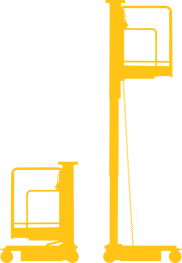
EN 280:2013+A1:2019 defines mobile elevating work platforms (MEWPs) and classifies them by travel capability and lift mechanism. Group A MEWPs can only be driven at stowed height, while Group B units can travel with the platform elevated. This distinction affects operator training requirements, safety features, and operational procedures for indoor mast lifts. Understanding these classifications is essential for compliance with the Machinery Directive 2006/42/EC and ensuring proper CE marking.
What this rule covers
EN 280:2013+A1:2019 is the harmonized European standard for design calculations, stability criteria, construction, safety examinations and tests for MEWPs. The standard divides MEWPs into groups based on their travel capabilities:
- Group A: MEWPs that can only travel with the platform in transport (stowed) position
- Group B: MEWPs that can travel with the platform raised
Additionally, MEWPs are classified by type based on their stability characteristics. Type 1 MEWPs have the vertical projection of their center of gravity always inside the tipping lines, which is typical for indoor mast lifts.
The standard applies to all MEWPs intended to move persons to working positions where they carry out work from the platform. Compliance with EN 280 provides presumption of conformity with the essential health and safety requirements of the Machinery Directive 2006/42/EC, which mandates CE marking for MEWPs placed on the EU market.
For international markets, ISO 18878:2013 corresponds to EN 280, ensuring consistent safety requirements across different regulatory frameworks.
How it applies to indoor mast lifts
Most indoor mast lifts are classified as Type 1, Group A MEWPs due to their design and operational characteristics. Push-around models cannot travel with the platform raised by definition, as they lack self-propulsion when elevated. Self-propelled indoor mast lifts typically restrict travel to the stowed position to maintain stability on level floors.
The Group A classification brings several practical advantages for indoor use:
- Simplified operator training requirements compared to Group B units
- Enhanced stability on floors with limited load capacity
- Reduced risk of tip-over in confined spaces
- Lower overall weight due to simpler drive mechanisms
For example, Safelift's product range includes both push-around (PA series) and self-propelled (MA series) models, all classified as Group A. The PA50 push-around platform weighs 331 kg, while the MA50 self-propelled mast lift weighs the same despite having drive motors, demonstrating the weight efficiency of Group A design.
Indoor environments often have strict floor loading limits, particularly in older buildings or on raised access flooring. Group A MEWPs, with their requirement to lower the platform before moving, distribute weight more evenly and reduce point loads during transport.
Practical compliance checklist
Ensuring compliance with EN 280 Group A requirements involves several verification steps that buyers and facility managers should follow:
- Declaration verification: Check that the manufacturer's EC Declaration of Conformity specifically states EN 280:2013+A1:2019 compliance and identifies the MEWP as Group A
- CE marking inspection: Verify the presence of CE marking on the machine, which is mandatory under the Machinery Directive 2006/42/EC
- Operating manual review: Confirm the manual clearly states travel restrictions for Group A units and is provided in the language of the country of use
- Safety system testing: Ensure interlocks or physical design prevents travel when the platform is raised
- Training documentation: Verify operator training materials match Group A operational requirements
Key documentation requirements include:
- EC Declaration of Conformity referencing EN 280:2013+A1:2019
- Operating and maintenance manual in the local language
- Technical file availability (manufacturer responsibility)
- Risk assessment documentation
Regular inspection and maintenance schedules should reflect the Group A classification, with particular attention to travel interlock systems on self-propelled models.
Where Safelift fits
All Safelift indoor mast lifts comply with EN 280 Type 1, Group A requirements. The PA series push-around models physically cannot travel with the platform raised, meeting Group A criteria through mechanical design. The MA series self-propelled units incorporate electronic interlocks that prevent drive engagement when the platform is elevated.
Weight specifications demonstrate suitability for sensitive indoor environments:
- PA35: 236 kg - suitable for standard office floors (typically rated 2.5-5 kN/m²)
- MA50: 331 kg - compatible with raised access flooring systems
- MA60: 466 kg - distributed load design for retail and warehouse applications
Each Safelift model includes:
- EC Declaration of Conformity referencing EN 280:2013+A1:2019
- CE marking visible on the chassis
- Multilingual operating manuals
- Group A travel restriction systems (mechanical or electronic)
The lightweight design philosophy aligns with Group A benefits, enabling use in buildings where heavier Group B scissor lifts or boom lifts would exceed floor loading limits.
Sources
The regulatory framework for MEWP classification stems from European standardization and machinery safety directives:
- EN 280:2013+A1:2019 - The harmonized standard for mobile elevating work platforms, maintained by CEN (European Committee for Standardization)
- Machinery Directive 2006/42/EC - Establishes the legal framework for CE marking and essential health and safety requirements
- ISO 18878:2013 - International equivalent providing global harmonization of MEWP safety requirements
National implementations may add requirements beyond EN 280, particularly regarding operator licensing, periodic inspections, and workplace risk assessments. Manufacturers must maintain technical files demonstrating compliance with all applicable requirements.
EN 280 Group A vs Group B Classification Comparison
| Classification | Travel with Platform Raised | Typical Indoor Use | Training Requirements | Safelift Models |
|---|---|---|---|---|
| Group A | No - Must be in stowed position | Yes - Most common for indoor mast lifts | Basic MEWP operator training | All PA and MA series |
| Group B | Yes - Can travel elevated | Less common - Mainly larger units | Advanced operator certification often required | Not applicable |
Frequently Asked Questions
What is the main difference between Group A and Group B MEWPs?
Group A MEWPs can only travel when the platform is fully lowered to the stowed position, while Group B units can travel with the platform elevated. This fundamental difference affects operator training requirements, safety systems, and typical applications.
Are all indoor mast lifts Group A?
Most indoor mast lifts are Group A, particularly push-around models which cannot self-propel when elevated. Compact self-propelled indoor models like the Safelift MA50 also use Group A classification to maintain stability and reduce floor loading.
Does Group A classification affect CE marking?
The group classification must be stated in the EC Declaration of Conformity, but both Group A and B can receive CE marking if they meet EN 280:2013+A1:2019 requirements. The classification primarily affects operational procedures and safety system design.

Sources
Get a Safelift quote
Tell us your facility constraints (working height, doorway width, country, lead time) and we send specs + indicative pricing within one business day. No registration, no sales call required.
Need a Safelift unit specified for your facility?
Get product specs, dimensional drawings, EN 280 compliance documentation, and pricing. Contact Safelift Sweden AB.